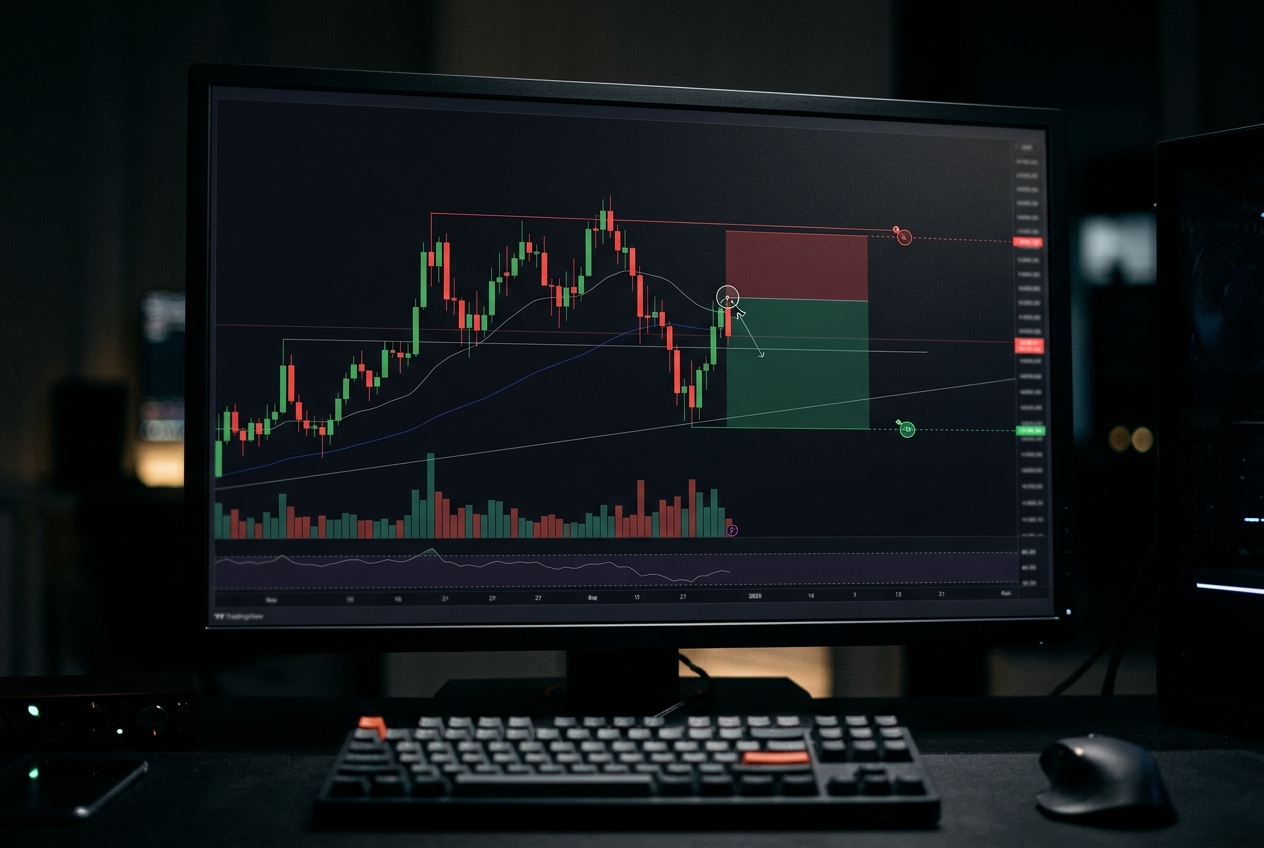
The backtest passed. The sample was 40 trades. Here are the eight questions that never get asked.
EVIDENCE LABEL — Methodology — evaluation standards
A backtest without methodology is a story with a chart. The equity curve answers 'what happened'; only the methodology answers 'why would it continue'. These are the questions that separate the two.
The eight questions
- Sample size: how many trades? Under ~100, nearly every statistic is noise-shaped.
- Out-of-sample: was any data held out, or did the strategy see everything it's scored on?
- Cost sensitivity: re-run with 1.5x and 2x costs — does the edge survive? If not, the edge IS the cost assumption.
- Parameter fragility: shift the moving-average length ±20%. If results collapse, you found noise, not a law.
- Regime coverage: does the test include a trending year and a choppy year?
- Net vs gross: commissions, spreads, slippage, swap — included and honest?
- Drawdown path: max drawdown matters more than CAGR for whether you'll actually keep executing.
- Survivorship: was the instrument universe chosen after knowing what worked?
The report we publish with every strategy study
Instrument and timeframe, exact entry/exit rules, stop logic, target methodology, sample size, test window, gross and net results, cost assumptions, max drawdown, and explicit limitations. Anything less is marketing. Our Strategy Lab hosts the calculators to reproduce every number we publish.
METHODOLOGY
Editorial standard, derived from published quantitative-finance practice on backtest evaluation.
LIMITATIONS
Standards evolve; strategy classes differ (discretionary vs systematic) in what can be tested meaningfully.
SOURCES & CITATIONS
DISCLOSURE
This article is independent editorial analysis for information and education. It is not investment advice, a recommendation, or an offer to trade any instrument. Markets involve risk of loss; past or illustrative performance never guarantees future results.

